01Why it matters
What the glass is letting in.
Most of the heat, glare and UV entering a cabin arrives through the glass. Film is the layer that addresses it at the source.
Heat builds long before you drive
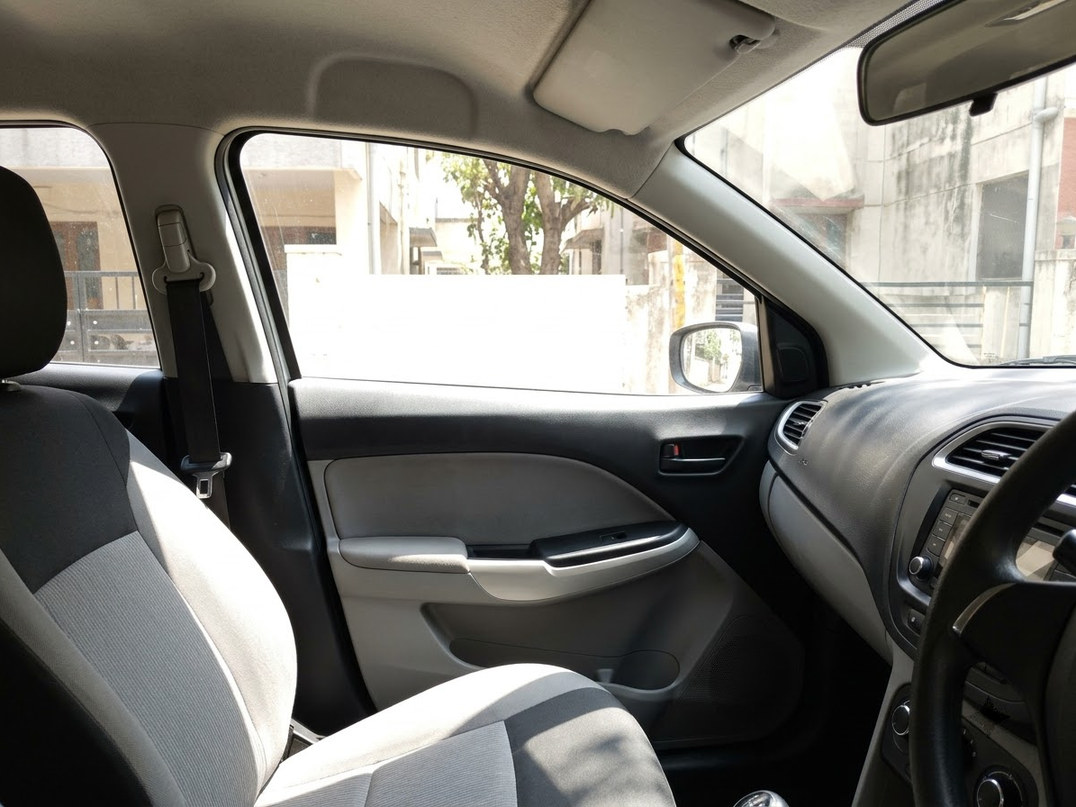
A car parked in direct sun turns the cabin into a heat store. Film works on the glass, which is where most of that heat arrives.
Glare is a comfort and safety issue
Low sun and oncoming headlights are tiring over a commute. Reducing glare makes long drives measurably less fatiguing.
Interiors fade from the inside out
Dashboards, seats and trim lose colour and crack with sustained UV exposure. The damage is gradual, which is why it is usually noticed late.
02Outcomes
What you get from it.
A cooler cabin
Less solar heat entering through the glass means the interior climbs more slowly while parked and settles faster once moving.
Reduced glare
Softer light through the side and rear glass makes bright afternoons and night driving easier on the eyes.
Interior protection
Cutting UV exposure slows the fading and cracking that ages a dashboard, seats and trim.
Discretion
Reduced visibility into the cabin keeps belongings less conspicuous when the car is parked.
03Scope
Included, and deliberately not included.
Scope is agreed before work begins so there are no assumptions on either side.
What the service covers
- Vehicle and glass inspection, including any existing film to be removed
- Removal of old film and adhesive where required
- Glass cleaning and preparation on every panel being filmed
- Film selection discussed against your priorities and the applicable regulations
- Precision cutting and fitting to each glass panel
- Squeegee, edge finishing and controlled drying
- Final quality check and care guidance
What it does not cover
- Security or anti-shatter performance, unless a film specified for that is agreed
- Repair of chipped, cracked or damaged glass
- Any guarantee about what a specific film measurement is permitted to be — that is confirmed against current regulations at fitting
- Protection of paint or bodywork — that is what PPF and coating address
04Process
How the work is done.
Eight stages, in order. Removal and glass preparation matter as much as the fitting itself.
Vehicle and glass inspection
Every panel is checked, along with any existing film, so the scope and condition are clear before quoting.
Old film and adhesive removal
Where film is already fitted, it and its adhesive are removed cleanly. Rushing this stage shows in the finish.
Glass preparation
Panels are cleaned thoroughly. Anything left on the glass will be visible and permanent once film is applied.
Film selection
Options are discussed against your priorities and confirmed against the regulations that apply to your vehicle.
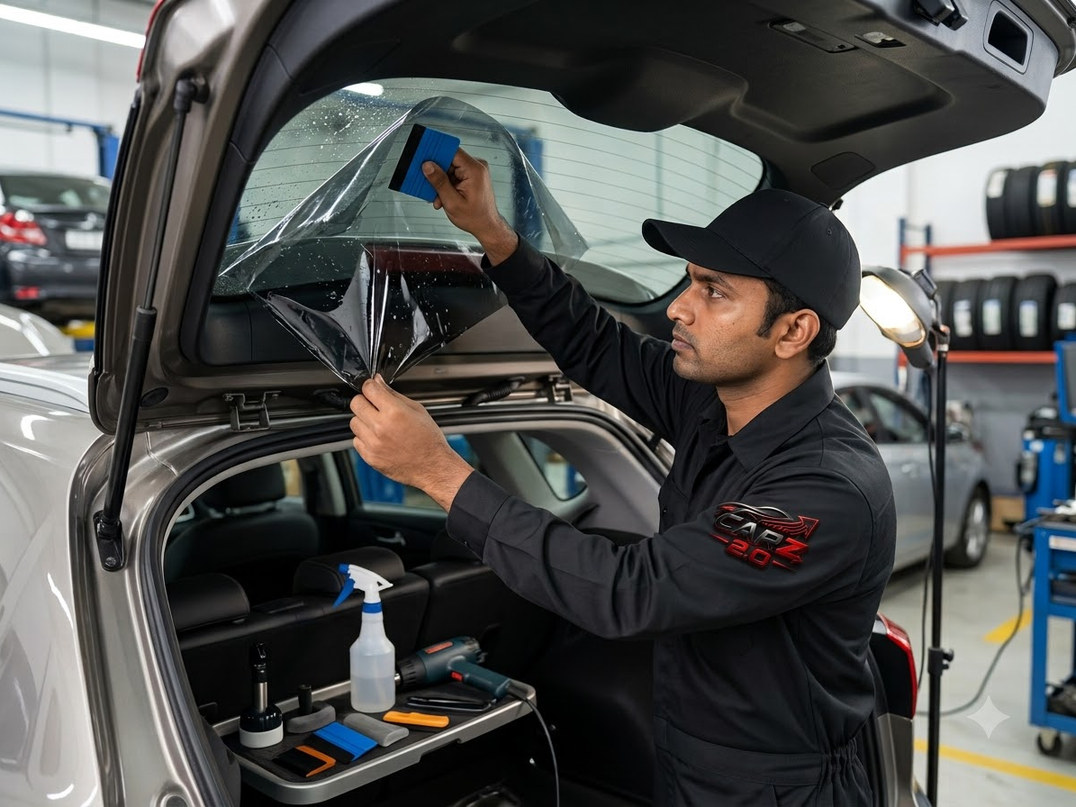
Precision cutting
Film is cut to each panel's shape, with curved glass handled individually rather than approximated.
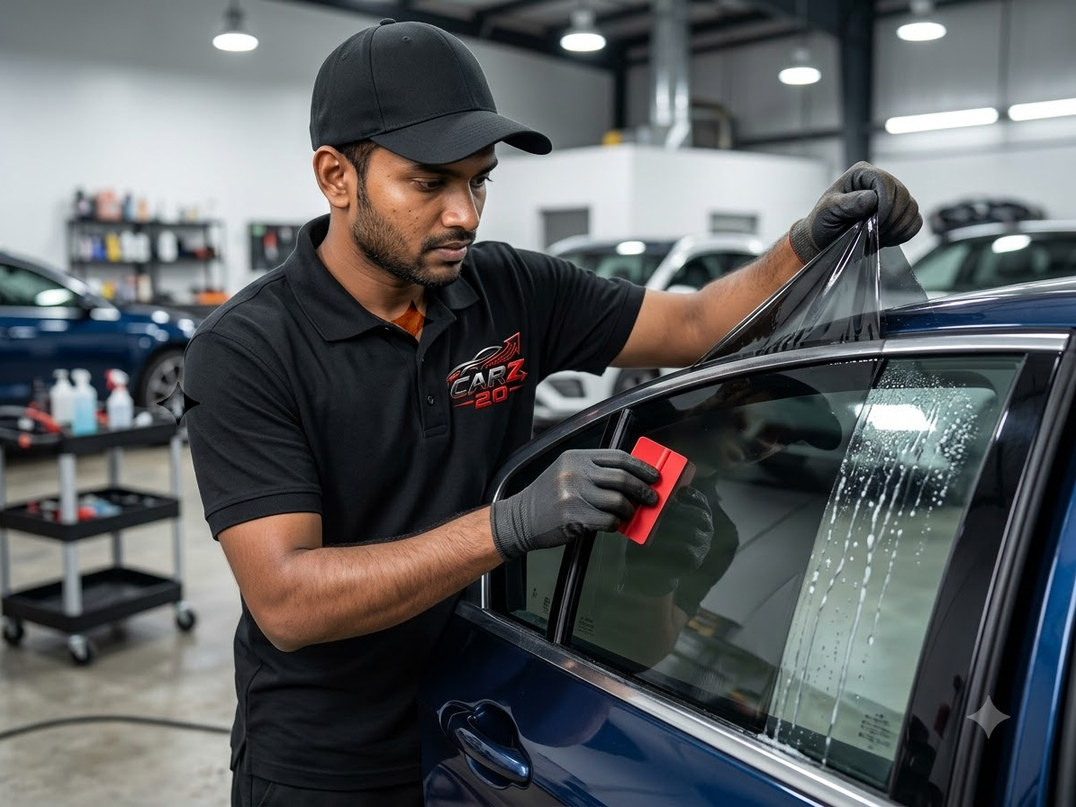
Application and finishing
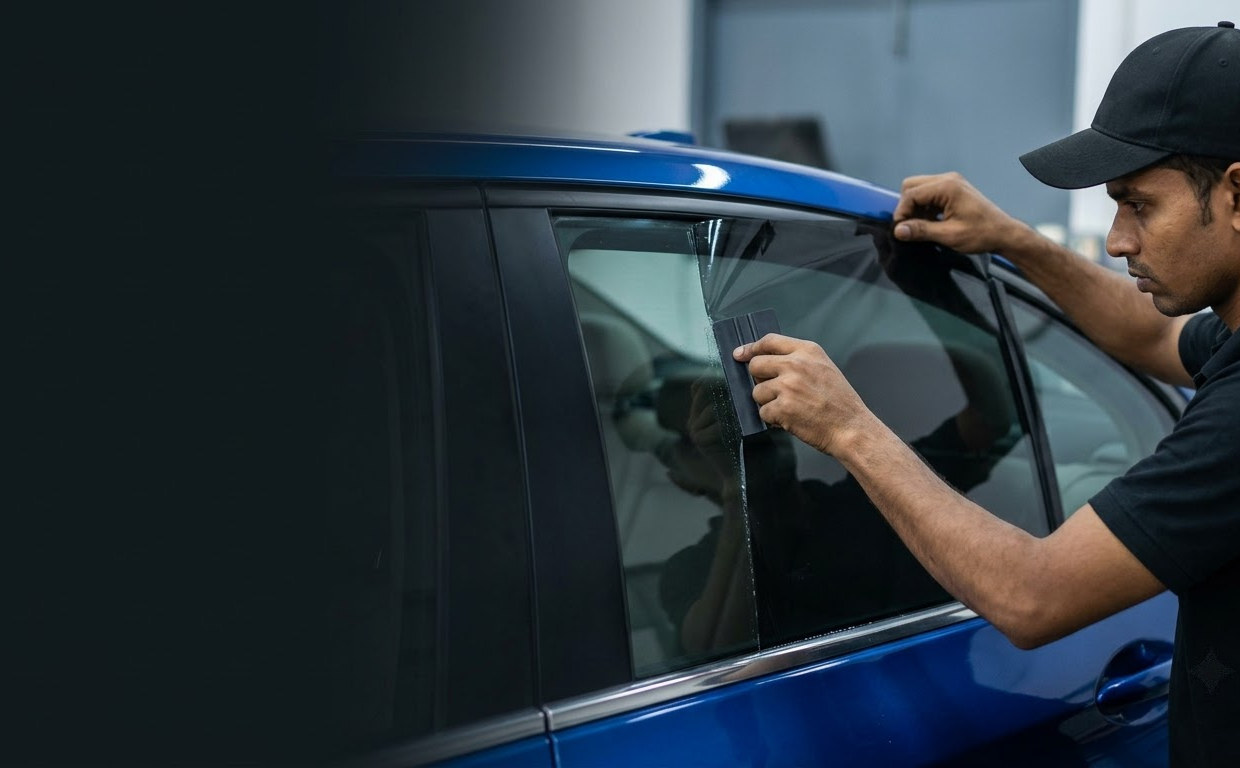
Film is applied, squeegeed out and finished at the edges so there is no lifting or trapped moisture.
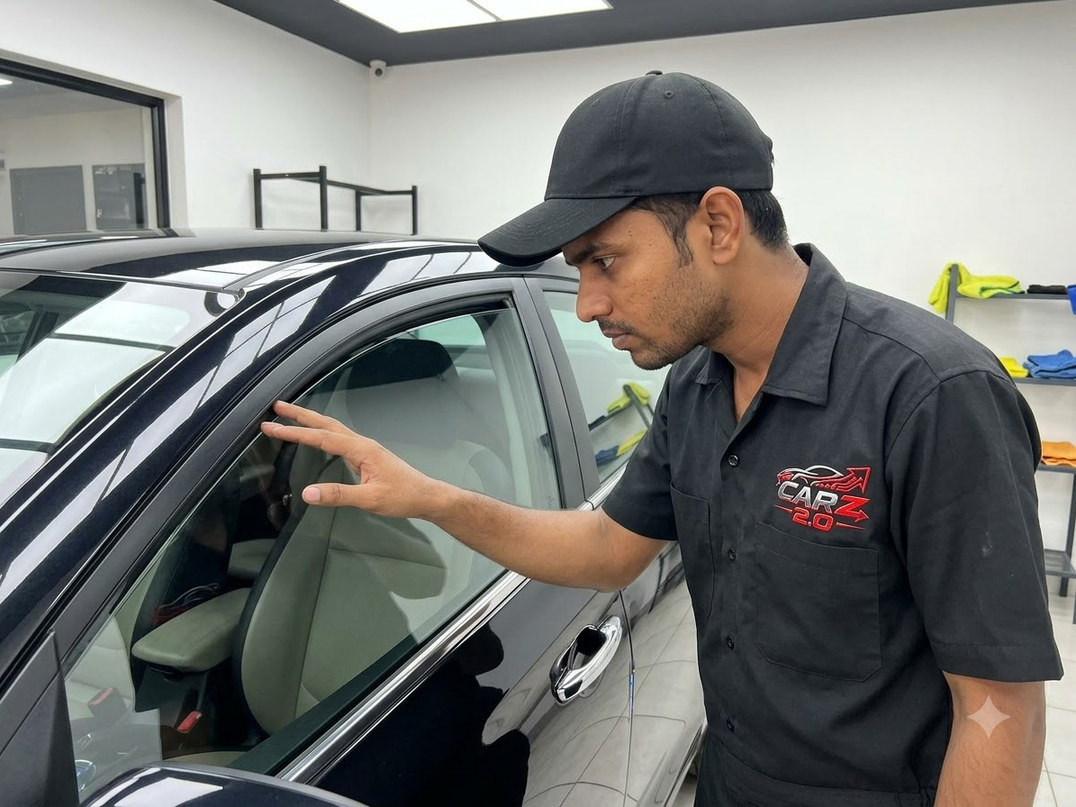
Drying and quality check
The car is held while the film settles, then inspected panel by panel before handover.
Care guidance
You leave knowing when the film is fully cured and how to clean the glass without damaging it.
05Proof
The work itself.
06Materials
Why film choice and fitting matter.
Specific films and their published specifications are confirmed with you before work begins.
Films are not interchangeable
Construction differs between products, and so does how they handle heat, glare and colour over time. The right choice depends on what you actually want from it.
Cheap film shows itself
Purpling, bubbling and adhesive failure are what low-grade film looks like after a couple of seasons in this climate.
Fitting decides the finish
Curved glass, edge work and a genuinely clean surface are where installation quality shows. The same film fitted badly looks entirely different.
Specifications confirmed at fitting
The specific film, its published specifications and how it sits against current regulations are confirmed with you before work begins.
07Honest limits
What film does, and what it does not.
Including the part most shops leave until after the film is already on the car.
What film does
It reduces solar heat, glare and UV entering through the glass, and makes the cabin less visible from outside.
What film does not do
It does not cool a car on its own, does not replace air conditioning, and is not security glazing unless a film specified for that is fitted.
Regulations apply
Permissible film specifications are set by regulation, not by preference. We confirm what is applicable to your vehicle before fitting rather than after.
Curing takes time
Film needs time to settle. Slight haze or moisture immediately after fitting is normal and clears as it cures — you will be told what to expect.
08Coverage
Options, discussed at inspection.
These are consultation starting points shaped around your car — not fixed packages.
09Questions
What owners ask before committing.
That is set by regulation rather than preference, and it differs by glass panel. We confirm what is applicable to your vehicle at inspection and fit within it — we would rather have that conversation before the film is on the car.
No. It reduces the solar heat arriving through the glass, so the cabin climbs more slowly and settles faster. It supports your air conditioning rather than replacing it.
Yes. Removal of old film and its adhesive is part of the work where needed, and it is assessed at inspection because it affects both timeline and finish.
That is low-grade film failing — the dye breaks down and the adhesive lets go. It is the clearest argument for discussing film quality before fitting rather than after.
Not immediately. Film needs curing time, and that varies with the product and the weather. You will be given a specific interval at handover.
Slight haze or trapped moisture right after fitting is normal and clears as the film cures. If anything remains once cured, bring the car back and we will look at it.
Standard sun film is not security glazing. If anti-shatter performance matters to you, say so at inspection — that is a different specification.
10Where we work