01Why it matters
Beyond what a wash can reach.
Detailing starts where washing stops. Understanding that difference is what makes the scope decision straightforward.
A wash cleans; detailing restores
Washing removes what is loose on the surface. Detailing addresses what has bonded to it, worked into the trim, or dulled the paint over years.
Interiors age faster than paint
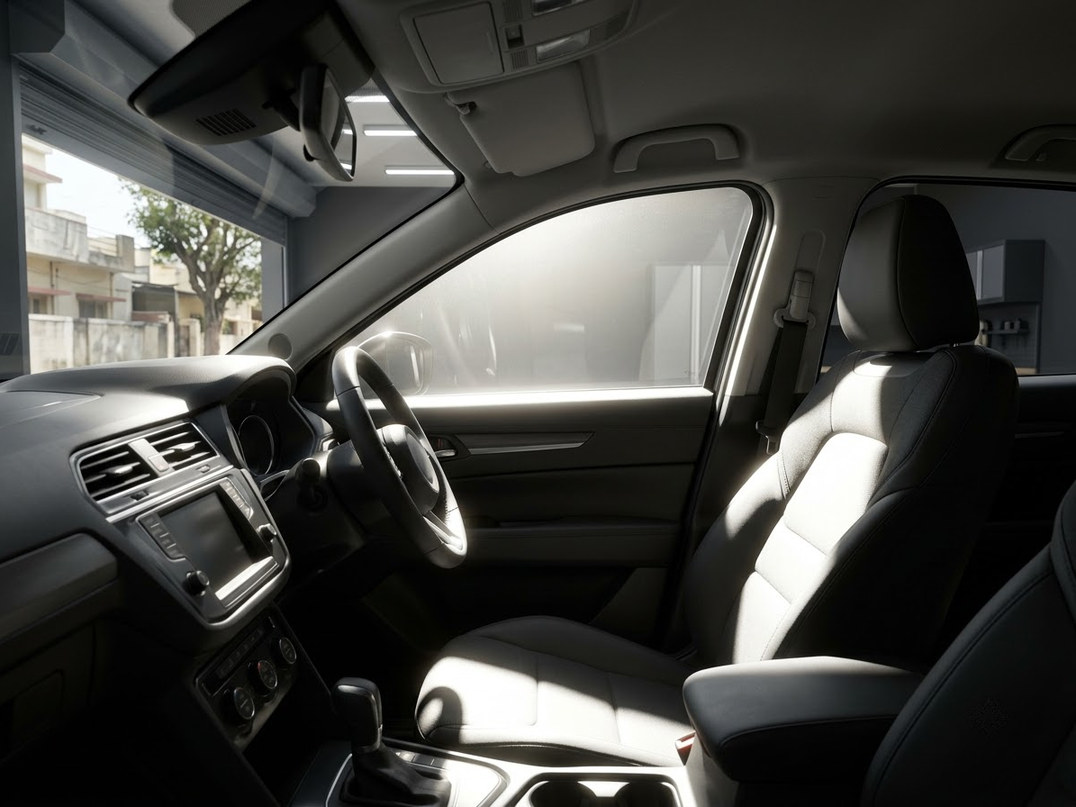
Seats, carpets and dashboards absorb everything — dust, spills, sun and use. It is usually the interior that makes a car feel old.
Condition decides the work
Two cars of the same age can need completely different treatment. That is why the recommendation follows an assessment rather than a menu.
02Outcomes
What you get from it.
Paint clarity restored
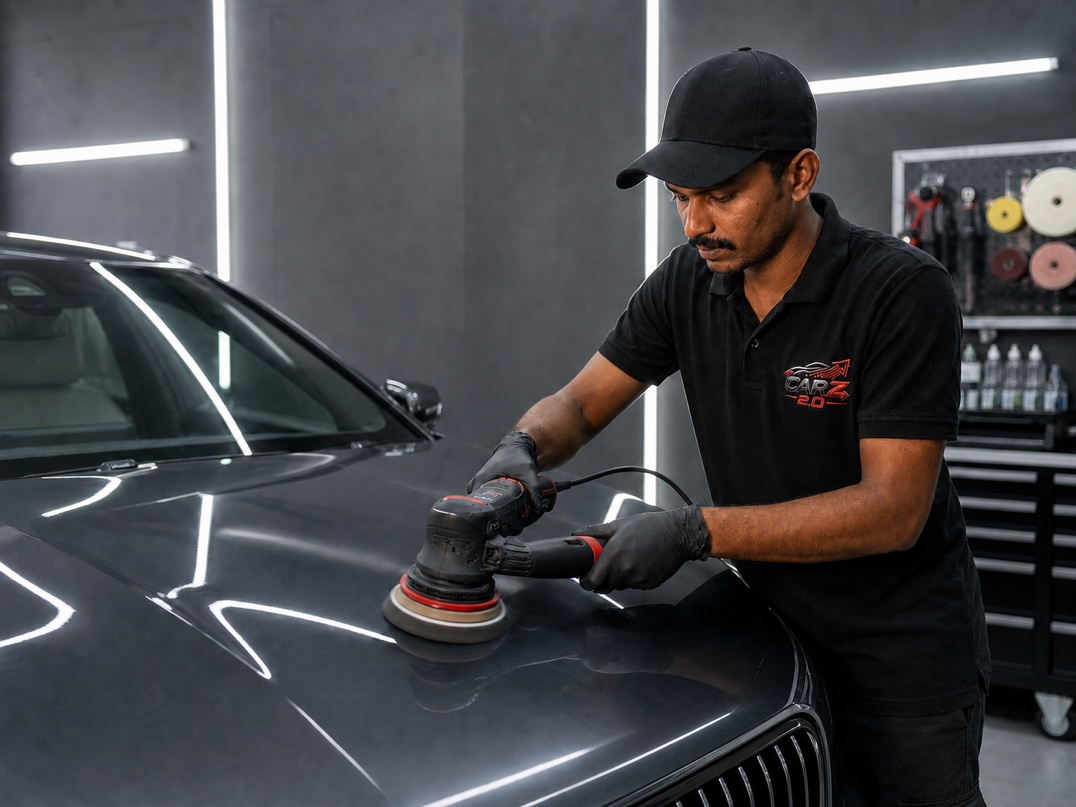
Decontamination and correction, where the inspection calls for it, bring back depth that washing alone cannot reach.
An interior that feels new
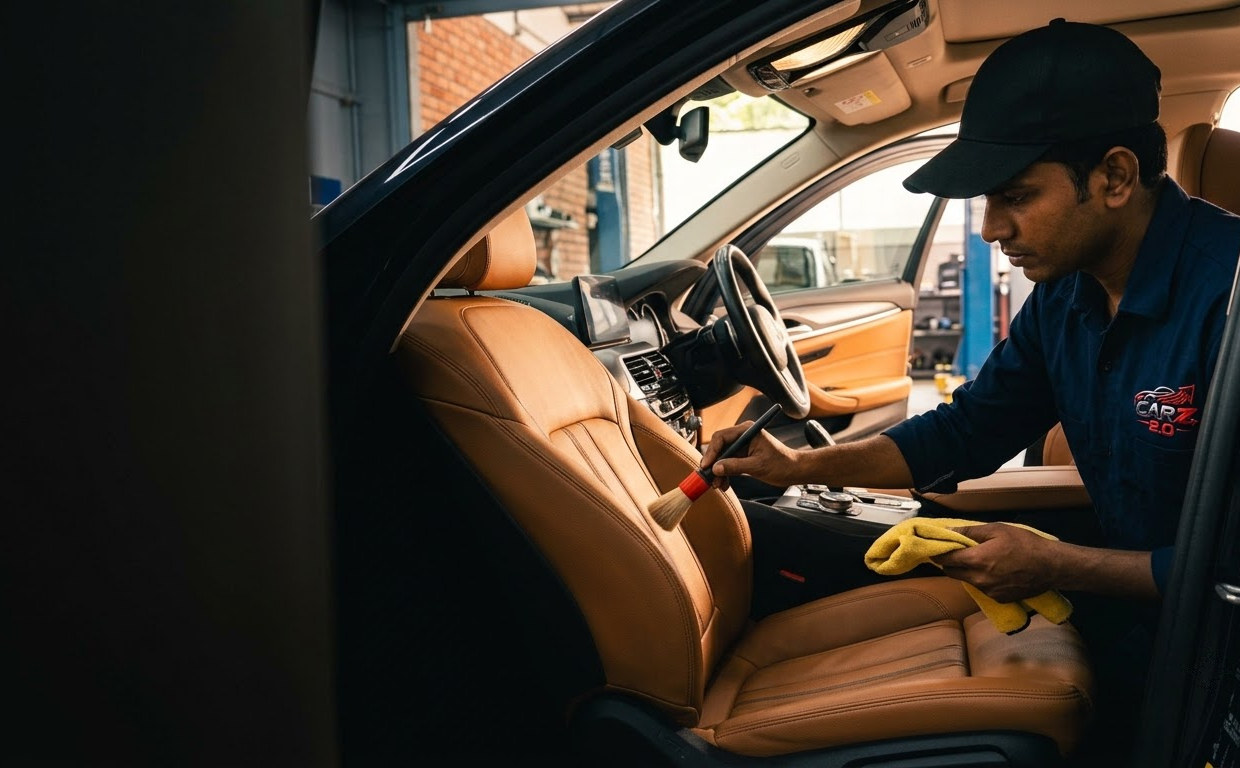
Deep cleaning of seats, carpets, trim and glass changes how the car feels every time you get into it.
Material-appropriate care
Leather, fabric, plastic and glass each get treatment suited to them rather than one product used everywhere.
Stronger resale presentation
A properly detailed car photographs and inspects better, which matters whenever it is valued or sold.
03Scope
Included, and deliberately not included.
Scope is agreed after the assessment so there are no assumptions on either side.
What the service covers
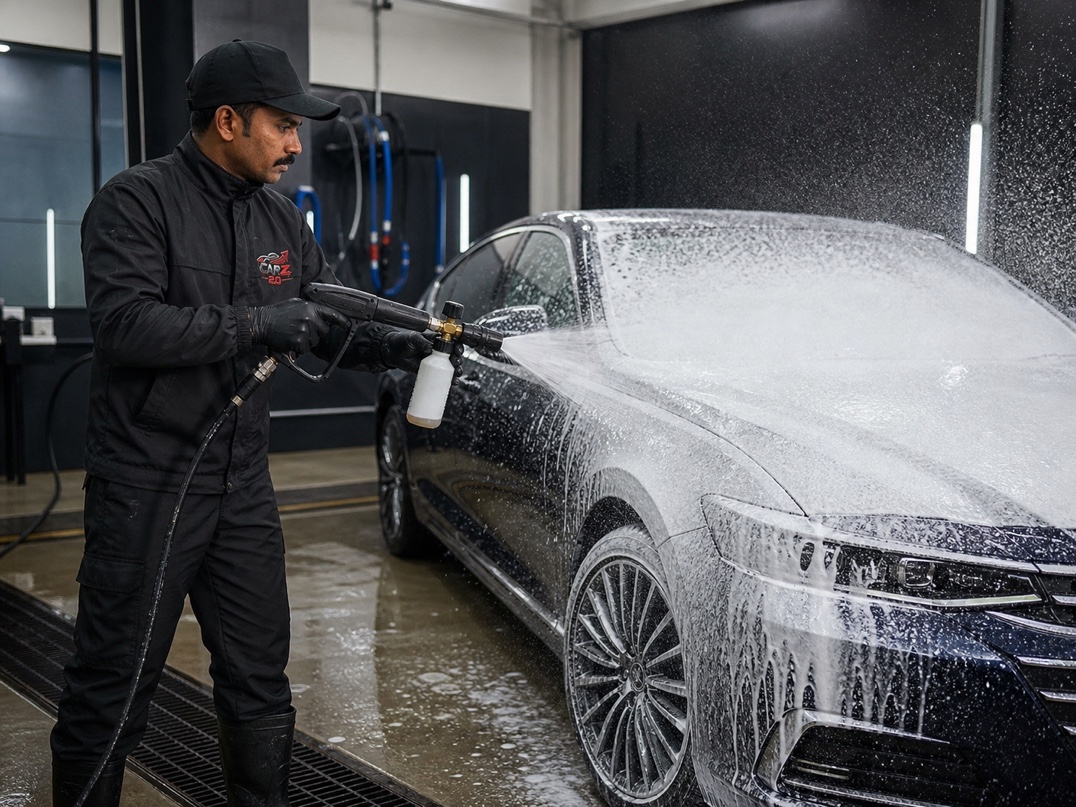
- Exterior pre-wash and contact-safe wash
- Decontamination of the paint surface
- Paint inspection, with correction where the assessment shows it is required
- Interior vacuum and deep clean
- Seats, carpets, dashboard and trim treated by material
- Glass cleaned inside and out
- Engine bay or odour treatment where suitable and agreed
What it does not cover
- Dent removal, panel repair or repainting
- Guaranteed removal of every stain, burn or tear — these are assessed honestly first
- Mechanical work, upholstery replacement or trim repair
- A fixed outcome quoted before the vehicle has been seen or photographed
04Process
How the work is done.
Seven stages, in order. The recommendation comes after the car has been seen, not before.
Enquiry
Tell us the vehicle, what is bothering you and what you want out of it. That frames everything that follows.
Photos or inspection
Clear photos or an in-person look establish real condition. Paint, interior and problem areas are all assessed.
Condition-based recommendation
You get a recommendation shaped around what the car actually needs, with anything unrealistic ruled out early.
Quote
Scope and cost are agreed before work starts, based on the assessment rather than an assumed package.
Detailing
The agreed work is carried out with methods and products chosen for each surface and material.
Quality check
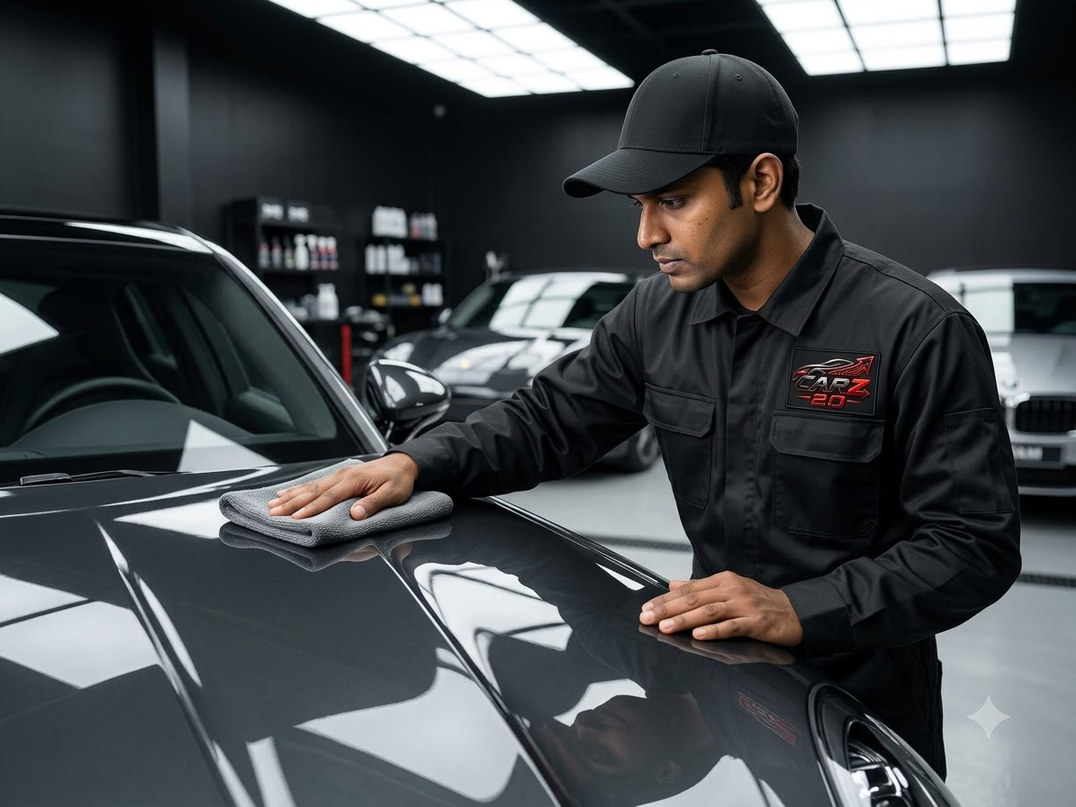
The finished car is inspected under proper lighting against the agreed scope.
Delivery
The work is explained at handover, along with what will keep the result looking this way.
05Proof
The work itself.
06Method
Why technique decides the result.
Products and methods are chosen for your car's materials and condition, and discussed at assessment.
Detailing is not one process
It is a set of decisions about paint, leather, fabric, plastic and glass. Treating them identically is what leaves trim greasy and leather stripped.
Most swirls come from washing
Dirty mitts, single buckets, automated brush tunnels and dry wiping cause the marks people assume came from the road.
Correction is assessed, not assumed
Clear coat is finite. Correction is done where it is worth doing and where the paint can take it, not automatically on every car.
Products confirmed at assessment
What gets used on your car depends on its materials and condition, and is discussed with you rather than decided silently.
07Honest limits
What detailing does, and what it does not.
Knowing which marks will improve and which will not is part of the assessment.
What detailing does
It deep cleans, decontaminates, enhances paint where possible and restores interior surfaces to the best condition they can realistically reach.
What detailing does not do
It is not bodywork. Dents, deep scratches through the paint, tears and burns need repair, not cleaning.
Some marks do not come out
Long-set stains, sun damage and worn leather may improve without disappearing. You will be told which is which before work starts.
Timelines follow condition
Size, condition and agreed scope decide how long a car takes. A realistic timeline is confirmed after assessment, not promised before it.
08Coverage
Options, discussed at assessment.
These are consultation starting points shaped around your car — not fixed packages.
09Questions
What owners ask before committing.
A wash removes loose dirt from the surface. Detailing addresses what has bonded to the paint, worked into the trim or dulled the finish — including decontamination, correction where suitable, and interior restoration.
It depends on vehicle size, condition and the agreed scope. That is a genuine answer rather than an evasive one — we confirm a realistic timeline after the assessment instead of promising one upfront.
It varies with how the car is used, stored and washed between visits. A car parked outside daily needs a different rhythm from a garaged weekend car. We will suggest an interval based on yours.
No, and anyone promising that has not seen the car. Long-set stains, sun damage, worn leather and scratches through the clear coat may improve without disappearing. You will be told what is realistic first.
Usually yes. A properly presented car inspects and photographs better, and pre-sale detailing is one of the more common reasons owners book it.
Yes — tell us at enquiry. Coated and filmed vehicles need adjusted methods and products, and knowing in advance avoids anything that would work against the protection already on the car.
Just remove personal belongings and anything valuable. Everything else is part of the job, and leaving the car as it normally is helps us assess honest condition.