01Why it matters
What you are actually protecting.
Paint protection film is a physical layer between your paint and the road. Understanding what it takes on makes the coverage decision straightforward.
Original paint only happens once
Factory paint is the finish a car is judged on and the one thing a respray can never truly replace. Protecting it early keeps the surface underneath untouched.
Damage collects where you cannot see it
Bonnet leading edges, bumpers, mirrors and door cups take the first hits from stone chips and road debris, long before the damage becomes obvious.
Daily use is the real test
Highway commutes, parking contact, wash-induced swirls and grit build up gradually. Film absorbs that contact instead of the paint.
02Outcomes
What you get from it.
Chip and debris absorption
A physical layer takes the impact of stones and road debris so the paint beneath stays intact.
Protection against light scratches
Everyday surface marks from washing, brushing past and loading are taken by the film, not the paint.
Finish preserved underneath
Gloss and colour stay as they left the factory, which matters when the car is valued or resold.
Removable when the time comes
Correctly installed film can be removed by a specialist, leaving the original paint as it was.
03Scope
Included, and deliberately not included.
Scope is agreed before work begins so there are no assumptions on either side.
What the service covers
- Full vehicle inspection and paint-condition assessment before any quote
- Surface preparation and decontamination of the panels being covered
- Paint correction where the inspection shows it is required
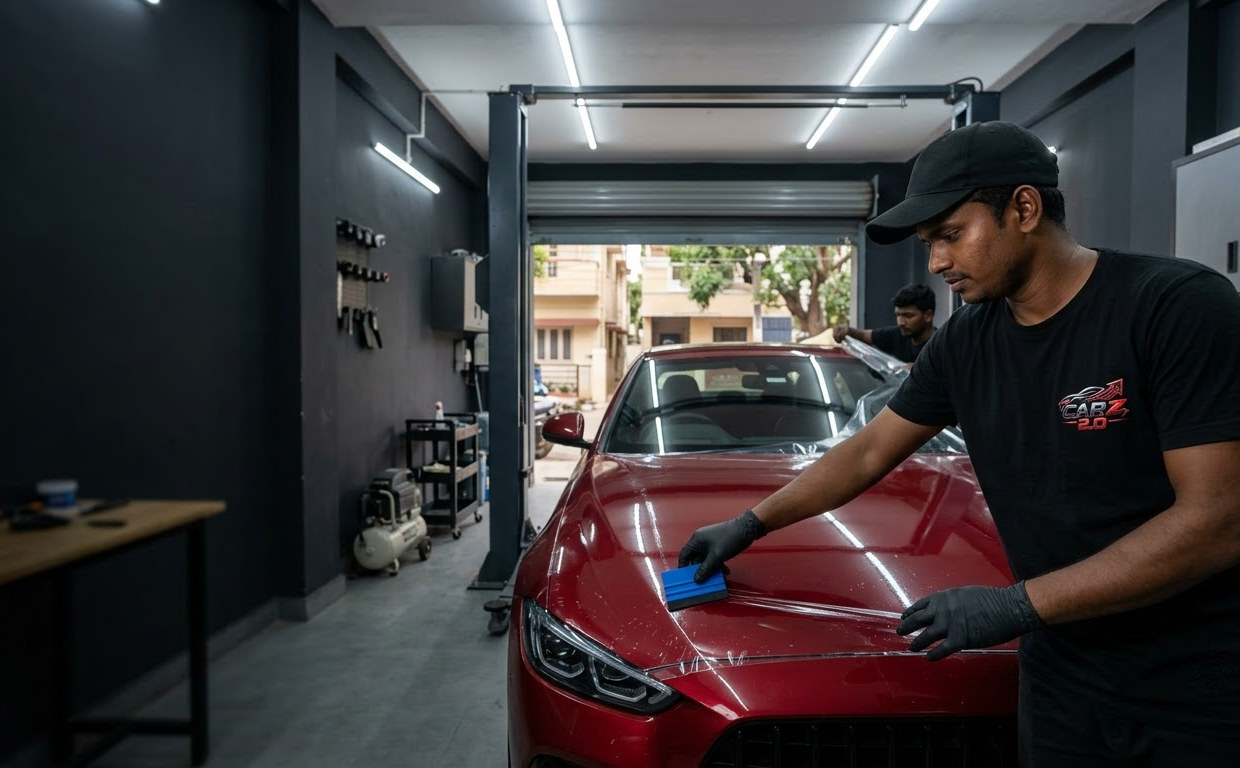
- Precision installation across the agreed coverage areas
- Edge finishing and wrapped edges where the panel allows
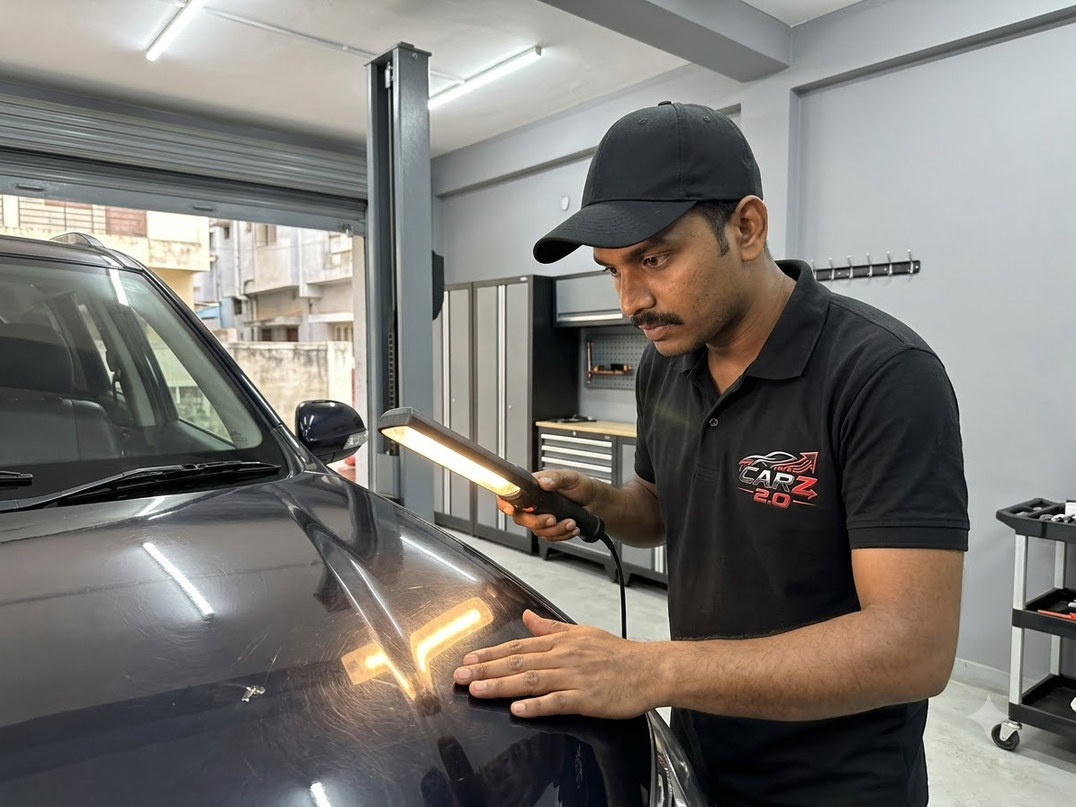
- Final quality check under inspection lighting
- Aftercare guidance for washing and maintenance
What it does not cover
- Repair of existing dents, deep scratches or damage that reaches the primer
- Mechanical, glass or trim repair work not related to the filmed panels
- Protection against collision damage, kerbing or vandalism
- Guaranteed removal of pre-existing paint defects — these are assessed first
04Process
How the work is done.
Seven stages, in order. Nothing is skipped to save time, and nothing starts before the inspection is agreed.
Vehicle inspection
The car is assessed panel by panel: paint condition, existing defects, high-impact zones and how the vehicle is actually used.
Surface preparation and decontamination
Panels are washed and decontaminated so nothing is trapped between the paint and the film.
Paint correction if required
Where the inspection finds swirls or marring, correction happens before installation. Film locks in whatever is underneath it.
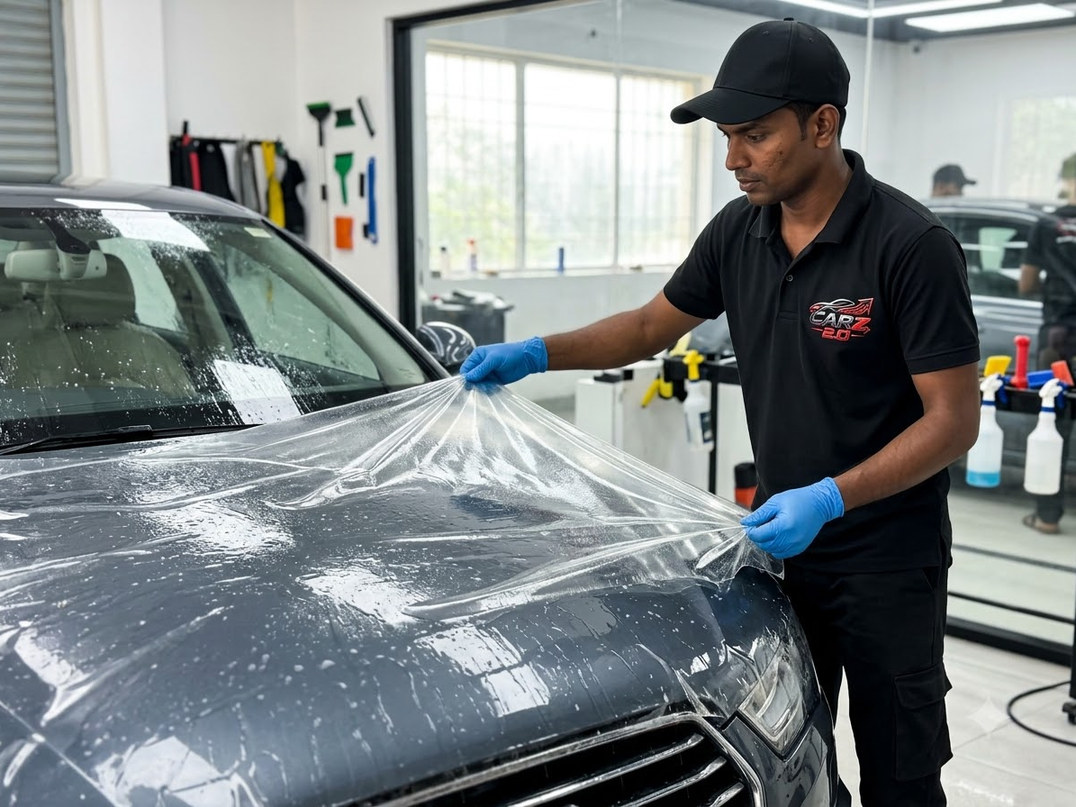
Precision installation
Film is applied to the agreed coverage areas in controlled conditions, with panel-specific handling.
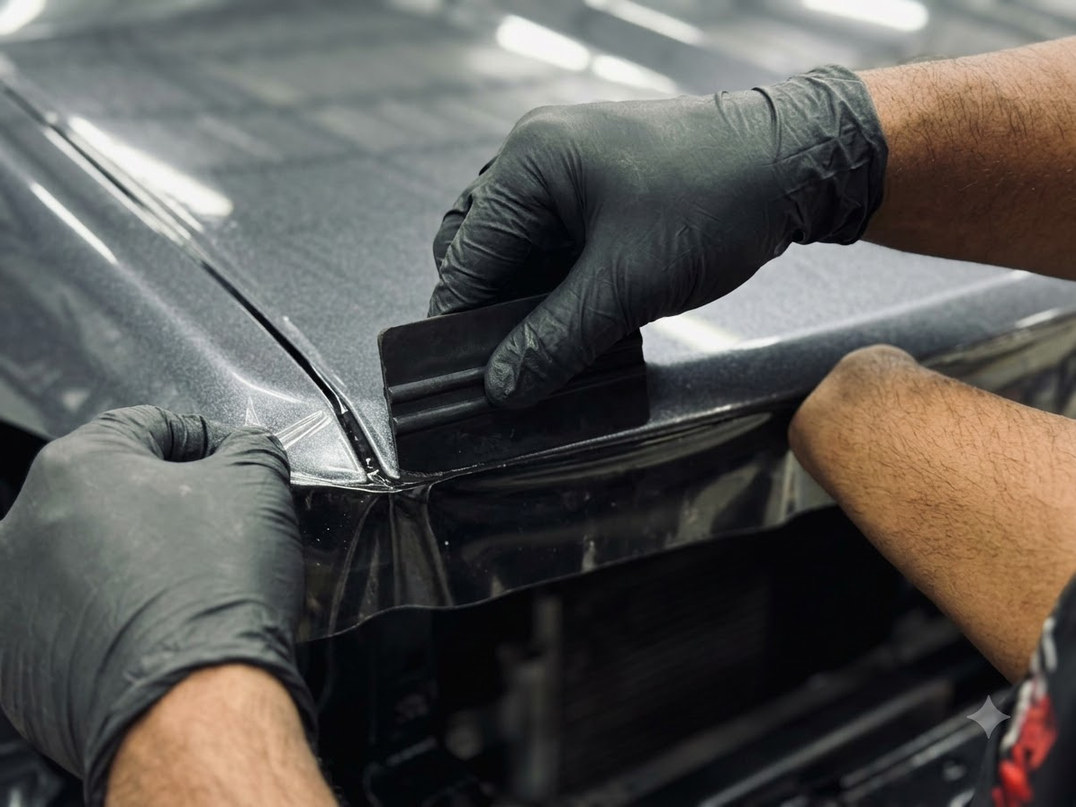
Edge finishing
Edges are trimmed and wrapped where the panel allows, so the film line is discreet and lifts are less likely.
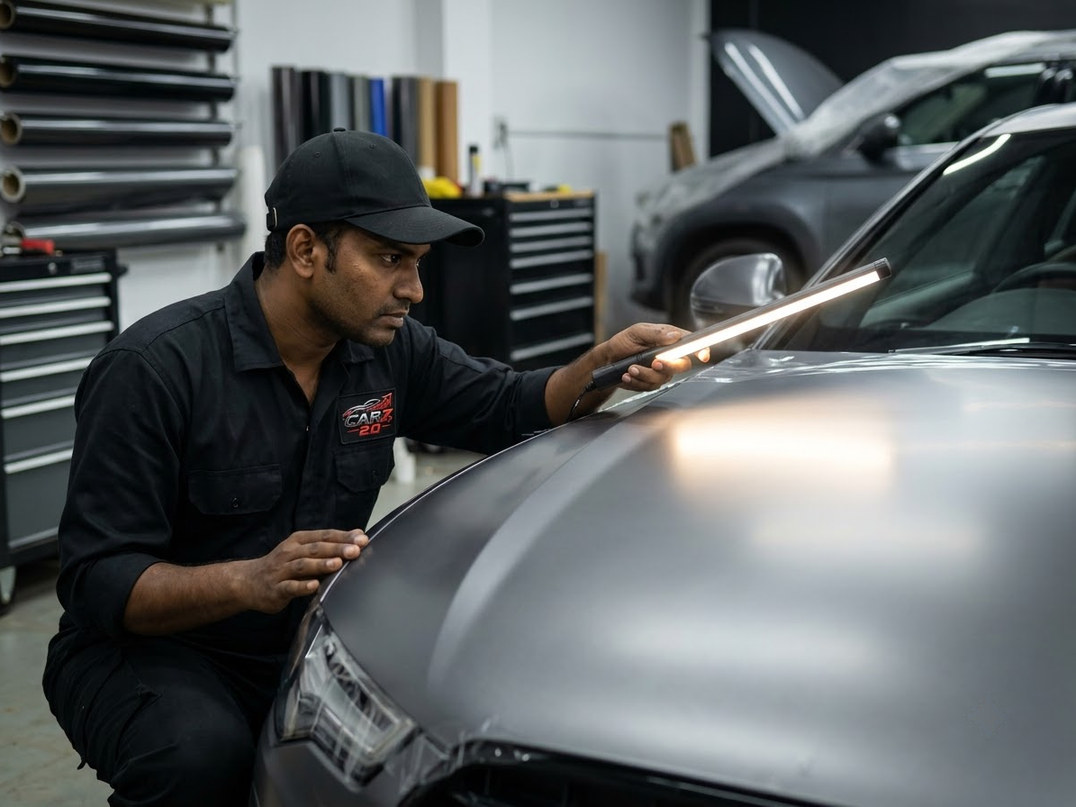
Final quality check
The finished work is inspected under proper lighting against the agreed scope before the car is handed back.
Care guidance
You leave knowing how to wash the car, what to avoid, and what to watch for over the life of the film.
05Proof
The work itself.
06Materials
Why film choice and installation matter.
Specific products and their published specifications are confirmed with you at inspection.
Film quality is not a detail
Thickness, clarity, the top coat and how the film ages all differ between products. The right choice depends on your car, your usage and the coverage you want.
Adhesive behaviour matters
Adhesive determines how cleanly film conforms to complex panels and how it behaves on removal years later. It is a specification worth discussing, not skipping.
Installer skill decides the result
Two cars with identical film can look entirely different. Preparation, panel handling and edge work are what separate a clean installation from a visible one.
Specifications confirmed at inspection
We discuss the specific film and its published terms with you at inspection, so what you agree to is what is actually being fitted.
07Honest limits
What film does, and what it does not.
Protection worth paying for is protection described accurately.
What film does
It absorbs stone chips, road debris and light surface scratches, and shields the paint from everyday contact and contamination.
What film does not do
It is not scratch-proof and not a permanent coating. Deep impacts, collision damage and kerbing can still reach the panel beneath.
Coverage has edges
Film protects the panels it covers. Anything outside the agreed coverage area is unprotected, which is why coverage is discussed openly.
Terms explained before you commit
Any manufacturer terms that apply to your chosen film are shown and explained at inspection, with their limits stated plainly.
08Coverage
Options, discussed at inspection.
These are consultation starting points shaped around your car — not fixed packages.
09Questions
What owners ask before committing.
It can, but it should not be without discussion. Film locks in whatever is beneath it, so existing swirls or scratches stay visible. The inspection identifies what correction is worth doing first.
Normal contact-safe washing is fine. Avoid high-pressure jets aimed directly at film edges, harsh brushes and automated brush tunnels. Full aftercare guidance is given at handover.
No. Full body, front end and targeted high-impact areas are all consultation options. Coverage is agreed with you at inspection rather than sold as a fixed package.
Look at the edges, panel gaps and complex curves. Clean wrapped edges, consistent lines and no lifting or trapped debris are what separate careful installation from rushed work.
No, and any claim otherwise is worth questioning. Film absorbs chips and light scratches. Deep impacts and collision damage can still reach the paint underneath.
It depends on coverage, panel complexity and whether correction is needed first. A realistic timeline is confirmed after the inspection, not before.
Correctly installed film can be removed by a specialist. Removal should be done professionally — that is part of why installation and adhesive quality matter.
10Where we work