01Why it matters
What coating actually changes.
A ceramic coating changes how the surface behaves. Knowing what that covers — and what it does not — makes the decision straightforward.
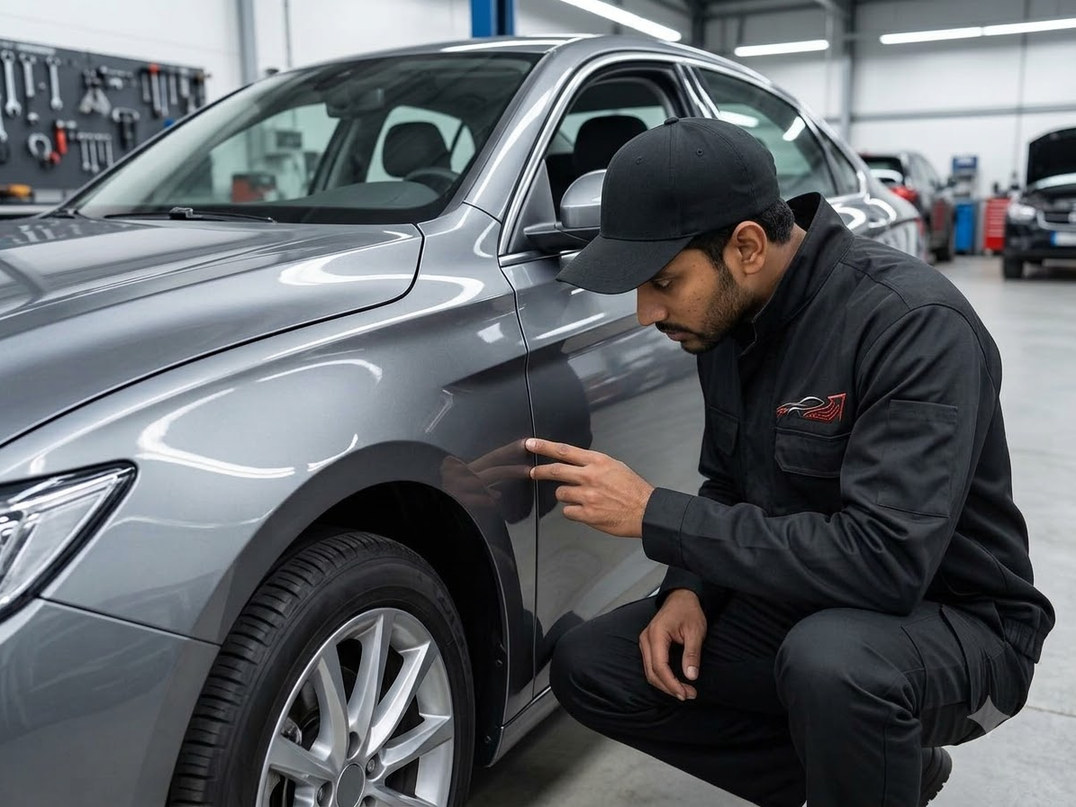
Paint dulls before it damages
Sun, heat, dust and rain leave paint flat long before anything is visibly wrong. Coating is about holding the finish, not repairing it.
Contamination bonds to bare paint
Road film, industrial fallout and hard-water spotting bond directly to unprotected clear coat and get harder to remove with time.
Washing is where damage begins
Most swirl marks come from washing, not driving. A slick, hydrophobic surface releases dirt more easily, so routine cleaning is less abrasive.
02Outcomes
What you get from it.
Depth and gloss
A correctly prepared and coated panel reads deeper and sharper, because the surface reflecting light is uniform.
Hydrophobic behaviour
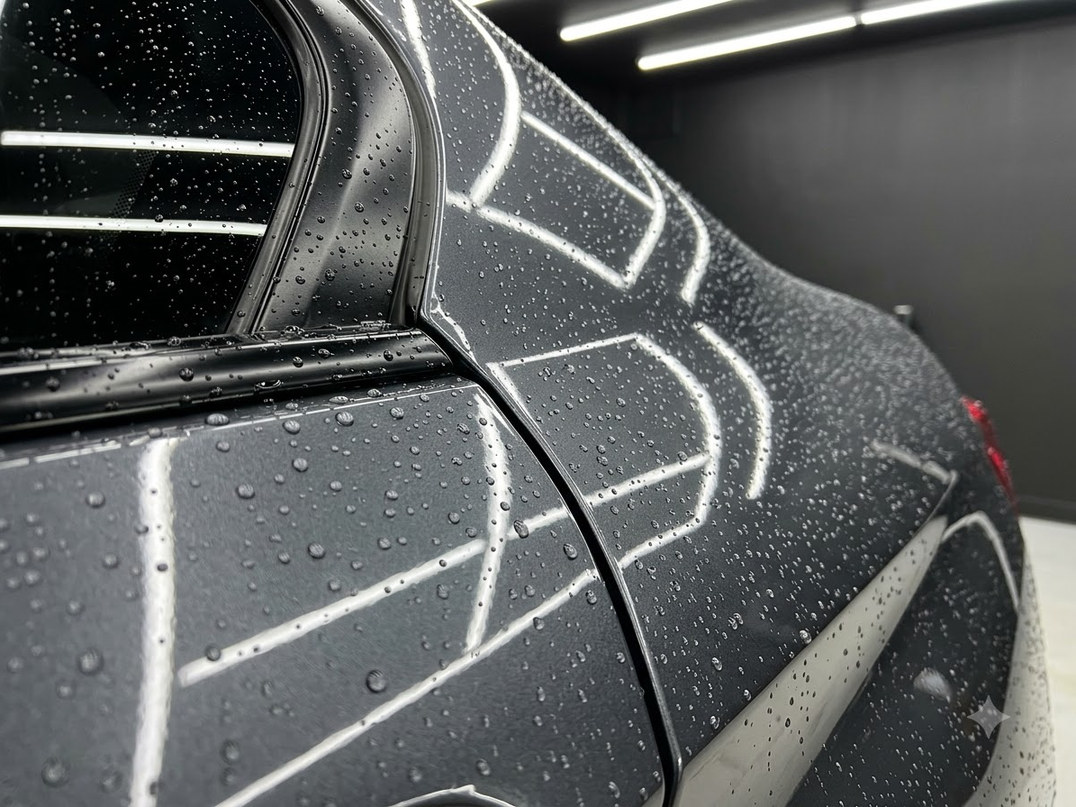
Water beads and sheets off rather than sitting on the panel, which is what makes drying faster and spotting less likely.
Chemical and environmental resistance
A sacrificial layer stands between your clear coat and road film, fallout and everyday contamination.
Easier maintenance
Dirt releases with less effort, so routine washing is gentler on the paint underneath.
03Scope
Included, and deliberately not included.
Scope is agreed before work begins so there are no assumptions on either side.
What the service covers
- Paint inspection and condition assessment under proper lighting
- Wash and full decontamination of the panels being coated
- Paint correction where the inspection shows it is required
- Panel preparation so the surface is ready to bond
- Coating application across the agreed panels
- Controlled curing before the vehicle leaves
- Final quality check and maintenance guidance
What it does not cover
- Protection from stone chips, kerbing or collision damage — that is what PPF addresses
- Removal of deep scratches or defects that reach beyond the clear coat
- Dent, trim or glass repair unrelated to the coated panels
- A permanent finish — coating is a maintained layer, not a one-time fix
04Process
How the work is done.
Eight stages, in order. Curing is part of the work, not an afterthought.
Inspection
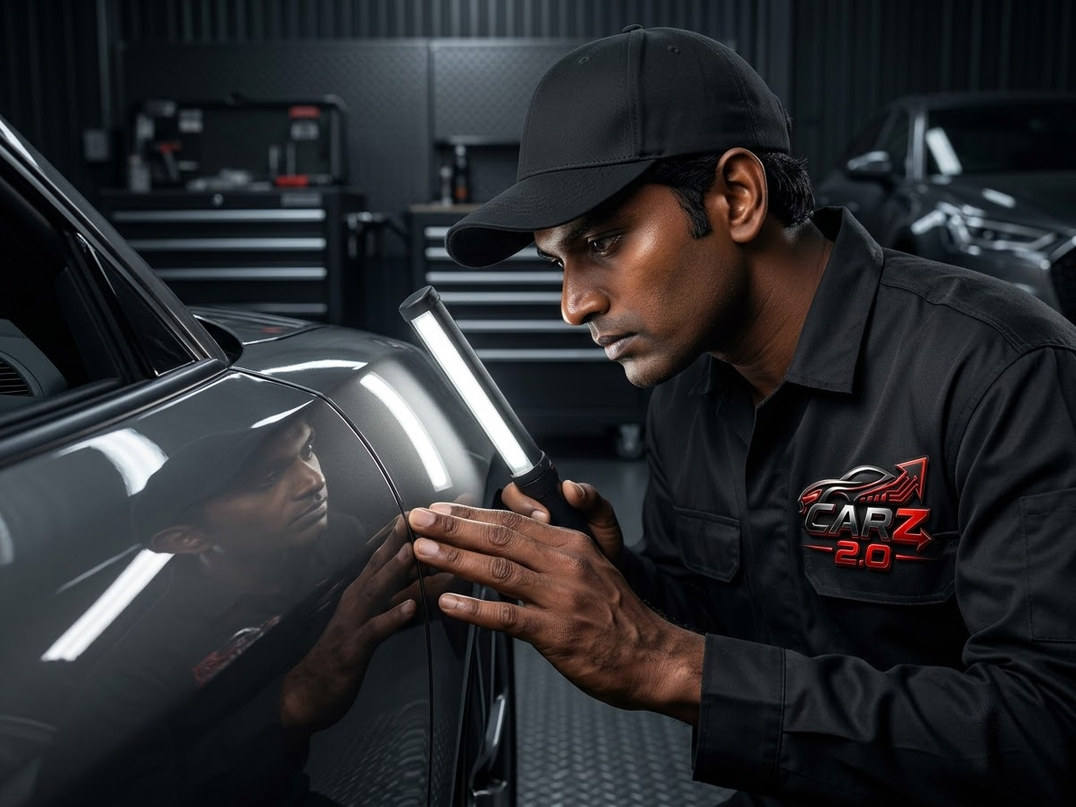
Paint is assessed under inspection lighting to establish its true condition, existing defects and what correction is realistic.
Wash and decontamination
Panels are washed and decontaminated so nothing is sealed under the coating.
Paint correction as required
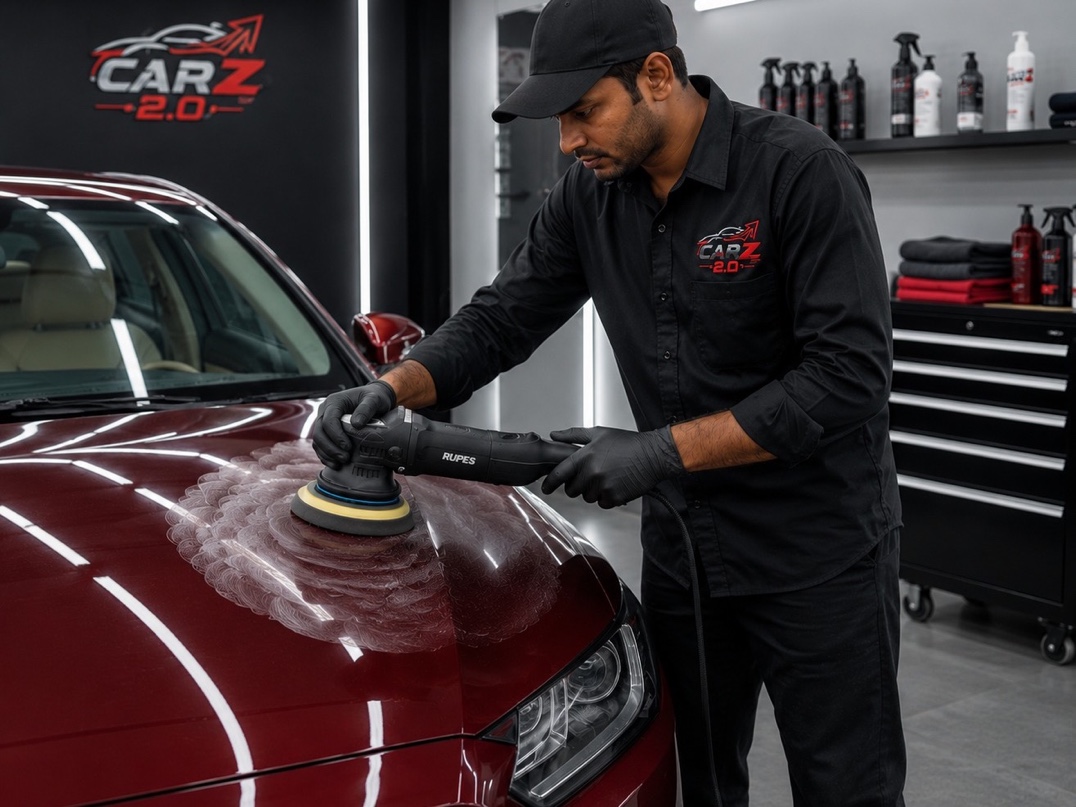
Swirls and marring are corrected where the inspection calls for it. Coating locks in whatever is beneath it.
Panel preparation
Surfaces are prepared and residue removed so the coating can bond properly rather than sit on oils.
Coating application
The coating is applied panel by panel in controlled conditions, levelled and checked as work proceeds.
Curing
The vehicle is held while the coating cures. Rushing this stage is what undermines the result.
Quality check
The finish is inspected under proper lighting against the agreed scope before handover.
Maintenance guidance
You leave knowing how to wash the car so the coating performs the way it should.
05Proof
The work itself.
06Materials
Why preparation decides the result.
Specific coatings and their published specifications are confirmed with you at inspection.
Preparation outweighs product
A coating applied over uncorrected paint preserves the defects. Most of the visible result comes from what happens before anything is applied.
Coatings differ in behaviour
Hardness, slickness, water behaviour and how a coating ages vary between products. The right choice depends on your car and how it is used and washed.
Curing conditions matter
Temperature, humidity and time affect how a coating sets. Controlled curing is part of the work, not an optional extra.
Specifications confirmed at inspection
The specific coating and its published terms are discussed with you at inspection, so what you agree to is what is applied.
07Honest limits
What coating does, and what it does not.
Ceramic and film solve different problems. Being clear about that is the point of this section.
Ceramic does not replace PPF
This is the distinction that matters most. Coating is a chemical layer for gloss and cleanliness; film is a physical layer for impact. They solve different problems.
Not impact-proof or scratch-proof
A coating will not stop a stone chip and will not prevent scratches from careless washing or contact. Any claim otherwise is worth questioning.
It is maintained, not permanent
Performance depends on washing technique and upkeep. A neglected coated car will not behave like a maintained one.
Terms explained before you commit
Any manufacturer terms attached to your chosen coating are shown and explained at inspection, with their limits stated plainly.
08Coverage
Options, discussed at inspection.
These are consultation starting points shaped around your car — not fixed packages.
09Questions
What owners ask before committing.
No. Coating is a chemical layer that changes how the surface behaves — gloss, water, cleaning. Film is a physical layer that absorbs impact. Many owners use film on high-impact panels and coating across the car.
Coating seals the surface as it finds it. Any swirls or marring underneath stay visible and become harder to address, so correction is assessed before anything is applied.
It depends on the panels covered, paint condition and how much correction is needed, plus curing time. A realistic timeline is confirmed after the inspection, not before.
Contact-safe washing with clean media, avoiding harsh chemicals and automated brush tunnels. Full guidance is given at handover — upkeep is what keeps the coating behaving well.
No. That is the most common misunderstanding about coatings. It resists chemical contamination and makes cleaning easier; it does not stop physical impact.
That depends on the specific product and how the car is maintained. We show the published terms for your chosen coating at inspection rather than quoting a general figure.
Yes, and new cars are often the best case — there is usually less correction to do. New paint still needs inspection and decontamination first.
10Where we work